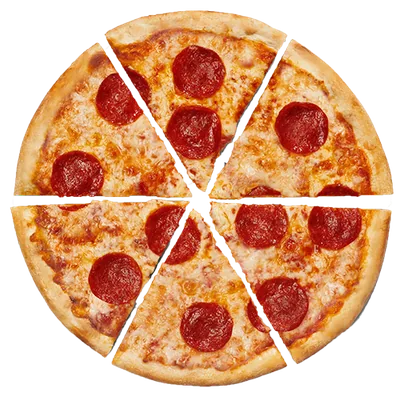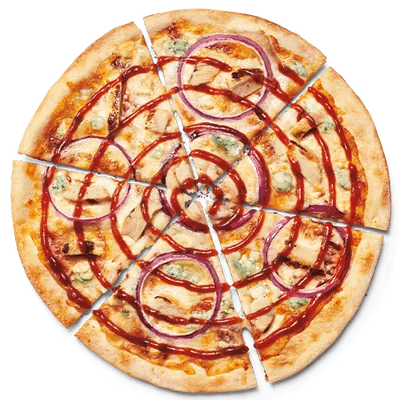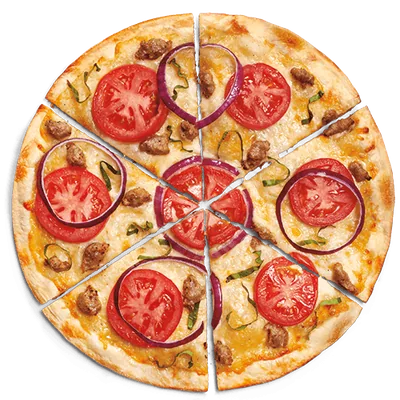
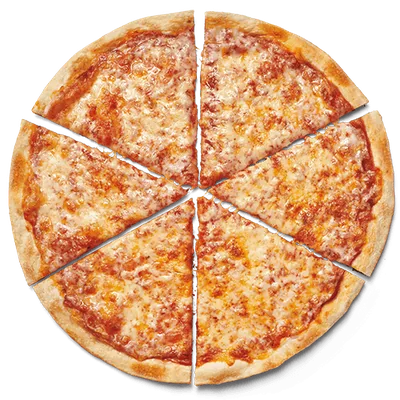
Yes: each captured signature-pizza row labeled MOD is the complete listed serving for that named standard pizza, not a per-slice row. Across the nine complete MOD rows in this site’s dated nutrition snapshot, calories range from 700 to 980 for the listed pizza. The source table labels the size as “MOD”; this guide uses “11-inch” because that is the common way people describe and search for the standard MOD pizza.
That answer needs two limits. First, a complete listed row is not a guarantee that every prepared restaurant pizza weighs exactly the same. Second, the number applies to the named recipe as captured, so extra cheese, added meat, finishing sauce, substitutions, and portion differences can change an order. Use the values as dated planning references and verify current details when precision matters.
MOD Pizza 11-inch calories for all nine captured signature pizzas
| Item | Serving | Calories | Fat | Sodium | Carbs | Protein |
|---|---|---|---|---|---|---|
| Caspian | MOD | 970 | 29 g | 2840 mg | 125 g | 49 g |
| Calexico | MOD | 860 | 28 g | 3230 mg | 95 g | 50 g |
| Dillon James | MOD | 830 | 28 g | 2160 mg | 102 g | 40 g |
| Jasper | MOD | 790 | 25 g | 2390 mg | 96 g | 41 g |
| Lucy Sunshine | MOD | 820 | 26 g | 2360 mg | 174 g | 39 g |
| Dominic | MOD | 700 | 20 g | 1800 mg | 98 g | 27 g |
| Tristan | MOD | 890 | 37 g | 2230 mg | 94 g | 40 g |
| Mad Dog | MOD | 980 | 43 g | 2710 mg | 95 g | 49 g |
| Cheese (The Maddy) | MOD | 710 | 21 g | 1960 mg | 94 g | 32 g |
The table uses MOD Pizza official nutrition information captured on 2026-07-14. Every row is filtered from the complete nutrition dataset by the exact category “Pizza” and size “MOD.” The full MOD Pizza nutrition reference preserves the other published fields too, including saturated fat, cholesterol, fiber, and sugars.
In ascending calorie order, the captured rows are Dominic at 700 calories, Cheese (The Maddy) at 710, Jasper at 790, Lucy Sunshine at 820, Dillon James at 830, Calexico at 860, Tristan at 890, Caspian at 970, and Mad Dog at 980. These are separate complete recipe rows. They are not built by adding a generic crust number to a few toppings inside this article.
Is the MOD Pizza calorie number for the whole pizza?
For these nine rows, treat the published MOD value as the whole listed pizza serving. The table does not label the calories “per slice,” and it does not provide a standard slice count. That distinction explains why a number such as 710 calories for Cheese (The Maddy) can look unexpectedly low when someone compares it with a large delivery pizza or with a single oversized restaurant slice.
The right comparison is item to item and serving to serving. A standard MOD signature row should be compared with another MOD row. A Mini or Mega Dough row is a different published serving and should not be substituted. If size is the main question, the Mini vs MOD vs Mega Dough calorie comparison keeps the recipe name fixed while showing how the captured size rows change.
Why the whole-pizza total can still differ from your order
Restaurant food is prepared by people, and a made-to-order pizza can vary. Dough handling, sauce coverage, cheese portions, toppings, finishing sauces, and special requests can all affect the finished result. A standard nutrition row is useful for planning, but it is not a measurement of the exact pizza handed across the counter.
Customization creates another boundary. The Cheese (The Maddy) row describes that captured named recipe. Adding pepperoni does not leave the total at 710 calories. Removing an ingredient also does not justify subtracting a component unless the component serving and the amount actually removed are known. The menu guide can help confirm the captured product description, while the nutrition reference shows complete rows and individual component serving labels without pretending that every custom combination is exact.
How the nine pizzas compare beyond calories
Calories are only one part of the row. Total fat spans 20 grams for Dominic to 43 grams for Mad Dog. Tristan is listed at 37 grams, while Caspian is listed at 29. Protein ranges from 27 grams for Dominic to 50 grams for Calexico; Caspian and Mad Dog each list 49 grams. Those differences can matter when two pizzas have fairly close calories but different recipes.
Sodium is especially important to read rather than infer from calories. Calexico has the highest captured sodium value at 3,230 milligrams even though its 860 calories are below Caspian and Mad Dog. Caspian lists 2,840 milligrams, Mad Dog 2,710, and Dominic the lowest captured value at 1,800. Carbohydrates range from 94 grams to 174 grams in the captured rows. The values belong to the exact source records; this guide does not “correct” an unusual-looking field by guessing.
How to estimate a personal per-slice number
You can divide a whole-pizza row for your own portion notes, but the result is arithmetic, not a new restaurant nutrition claim. Start with the complete listed total, count how many equal portions you actually intend to use, and divide. Keep the assumption beside the result so it is not later mistaken for an official per-slice serving.
For example, dividing the captured 710-calorie Cheese (The Maddy) row into four equal portions gives 177.5 calories per hypothetical portion. Dividing the same total into six equal portions gives about 118.3. Those figures do not prove that the restaurant cuts every pizza into four or six equal slices, and real slices may not contain equal amounts of cheese, sauce, crust, or toppings.
If you eat half of a listed pizza, multiplying the row by 0.5 is usually clearer than inventing a slice standard. If leftovers are weighed or divided unevenly, describe the result as an estimate. The important point is that the 700–980 calorie range in this article starts with complete MOD rows, while any fraction is a personal planning scenario.
How to check a standard pizza in the calculator
- Open the MOD Pizza Calorie Calculator.
- Search for the signature pizza name, such as Dominic, Calexico, or Mad Dog.
- Use the size selector and choose the exact MOD variant rather than Mini or Mega Dough.
- Add one portion and confirm the selected summary repeats the pizza name and MOD size.
- Read calories together with fat, sodium, carbohydrates, and protein.
- For a second comparison, clear the first selection or add the second exact variant intentionally.
The calculator is best for supported complete rows. It should not be treated as a scale that knows how much of each topping a restaurant used. For a customized order, record every serving assumption and expect more uncertainty than with an unchanged signature pizza.
Practical takeaways for tracking an 11-inch MOD pizza
- The nine captured standard signature rows range from 700 to 980 calories.
- The MOD value is the complete listed pizza serving, not a published per-slice figure.
- The source row does not supply a universal slice count.
- Divide only for your own portion scenario and label the result as an estimate.
- Match the exact pizza name and MOD size before comparing totals.
- Review sodium, fat, carbohydrates, and protein instead of ranking by calories alone.
- Account for additions, substitutions, finishing sauces, and restaurant portion variation.
For more source-backed planning guides, browse the MOD Pizza nutrition blog. You can also review the current official MOD Pizza nutrition information before ordering. Recipes, serving practices, ingredients, nutrition, and availability may change after the captured source date.